American Football Numbers SVG Designs: Graphics for Crafts & Branding
As a brand designer who’s developed visual identities for over 30 local businesses—from artisanal candle studios in Portland to family-run BBQ sauce brands in Nashville—I recently evaluated the American Football Numbers SVG Designs for potential use in a real-world branding project: a limited-edition “Touchdown Treats” football-themed cookie line launching at a neighborhood bakery in Austin.
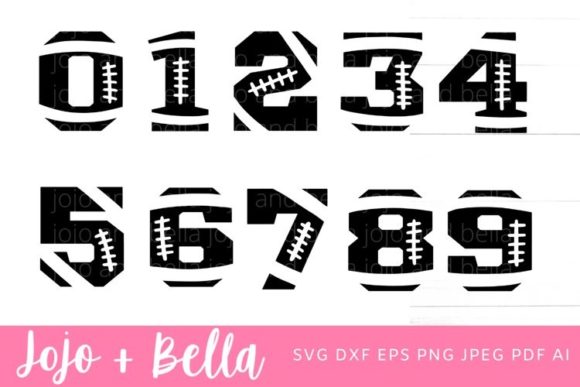
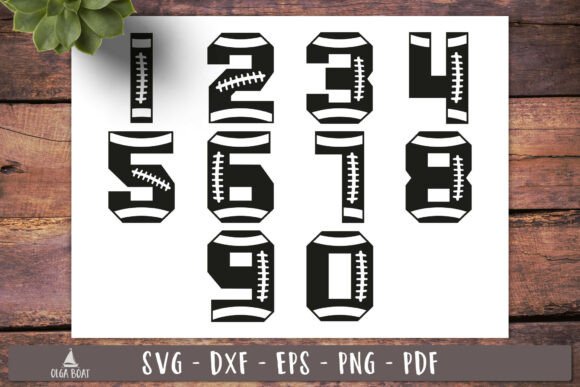
My first impression? These aren’t just clipart-style digits. The American Football Numbers SVG bundle features 0–9 digits with bold, clean outlines, subtle stitching textures, and dynamic angular weight—evoking vintage jerseys and stadium signage without leaning into cartoonish or overly aggressive sport aesthetics. It reads as playful yet confident, handmade but precise, and energetic without sacrificing legibility. That balance makes it unexpectedly versatile for small business branding—not just for sports shops, but for any local business wanting to inject spirited authenticity into product labels, packaging accents, or seasonal campaigns.
Where This Graphic Design Asset Earns Its Place in Real Branding
In our bakery project, we used the numbers across five touchpoints: custom cookie box wraps (featuring “#24” on the front panel), hang tags tied to gift bundles, social media carousel graphics announcing pre-orders, printable menu inserts for game-day pop-ups, and vinyl decals for the café’s front window. Each application reinforced a cohesive brand identity—rooted in community, celebration, and tactile charm.
The American Football Numbers SVG Designs strengthened visual hierarchy instantly: on a matte kraft box, the crisp black vector numbers popped against cream stock, guiding the eye before the logo even registered. On thank-you cards, they added personality without overwhelming handwritten notes. In digital ads, they anchored playful typography while keeping focus on flavor names (“Hail Mary Honey Oat”) and launch dates.
This isn’t decorative filler—it’s functional branding infrastructure. When applied thoughtfully, it supports better product recognition (shoppers remember the bold “#7” on your jam jar), clearer visual hierarchy (numbers call out size, batch, or edition), more consistent brand identity (same digit style across web, print, and packaging), and improved customer trust (polished execution signals care and professionalism).
Top 6 High-Impact Uses for Local Businesses
- Product labels & packaging accents: Ideal for numbered editions (e.g., “Batch #12”), flavor variants (“#3 Salted Caramel”), or size indicators (“#5 Large Jar”). Works especially well on textured papers, kraft boxes, and matte stickers.
- Hero graphics for seasonal campaigns: Think “#1 Fall Collection” banners for a boutique or “#42 Holiday Box” mockups for handmade soap brands.
- Decorative brand elements: Subtle repeats along packaging seams, borders on thank-you cards, or corner accents on price lists and menus.
- Promotional banners & social media graphics: Layered over lifestyle photos or paired with bold sans-serif type for Instagram Stories and Facebook event covers.
- Product mockups for e-commerce: Adds instant context—e.g., placing “#9” on a mockup of a football-shaped candle or jersey-print tea towel.
- Printable design kits for local makers: Bundled into Canva templates for farmers’ market vendors or craft fair sellers needing ready-to-use, branded signage.
Where Caution Is Essential
This graphic design asset shines brightest when intentionality leads. Avoid using American Football Numbers SVG Designs in contexts where clarity or restraint is non-negotiable: formal corporate branding (e.g., law firm letterhead), ingredient-heavy food labels where space is tight, legal disclaimers, or luxury minimalist skincare lines where every element must breathe. It also competes poorly on low-contrast backgrounds (e.g., light gray text on beige) or when scaled below 8mm on physical labels—always test print size early.
Crucially, don’t assume compatibility. I’ve seen beautiful SVG designs fail in production because vectors weren’t truly editable or PNG transparency bled at the edges. Always inspect the files before committing to client work.
Practical Brand Designer Notes You Can’t Skip
- Test it on real packaging mockups—not just screen previews—to assess scale, contrast, and material interaction.
- Check black-and-white usage: Does the number retain impact when printed flat black on uncoated stock?
- Preview it on small labels: At 12pt height, does the interior negative space stay readable?
- Test it with your brand colors: Does “#5” in forest green read as warm and earthy—or muddy and indistinct?
- Compare it side-by-side with competitor packaging: Does it differentiate your shelf presence, or blend in?
- Review print quality at 300dpi—especially if using for offset or foil-stamped applications.
- Verify PNG transparency: Are edges pixel-perfect, or do halos appear around curves?
- Confirm SVG editability: Can you adjust stroke weight, remove texture layers, or recolor paths without breaking the vector?
- Test it beside your full font system: Does it harmonize with serif body copy, sans-serif headings, script accents, and display fonts?
- Always confirm commercial license terms—especially for physical product sales, client work, or digital product resale (e.g., bundling into a Canva template).
For creative entrepreneurs building authentic local brands—whether you run a candle studio, coffee roastery, children’s apparel line, or home decor shop—the American Football Numbers SVG Designs offer more than decoration. They’re a flexible, mood-driven graphic design asset that, when grounded in strategic intent, elevates packaging design, sharpens product labels, deepens emotional connection, and strengthens small business branding across every customer touchpoint. Used wisely, it doesn’t just say “football”—it says “we know our people, our place, and how to make something memorable.”